Kitchen gardens – 10 steps to grow veg in your backyard
Kitchen gardens magazine, making a veg garden, how to set up a veggie garden, how to prepare a raised vegetable garden, how to start a new vegetable garden, how to prepare a new vegetable garden, how to grow a veggie garden, kitchen gardens naples florida, how to build a veggie garden, how to start a veg garden.
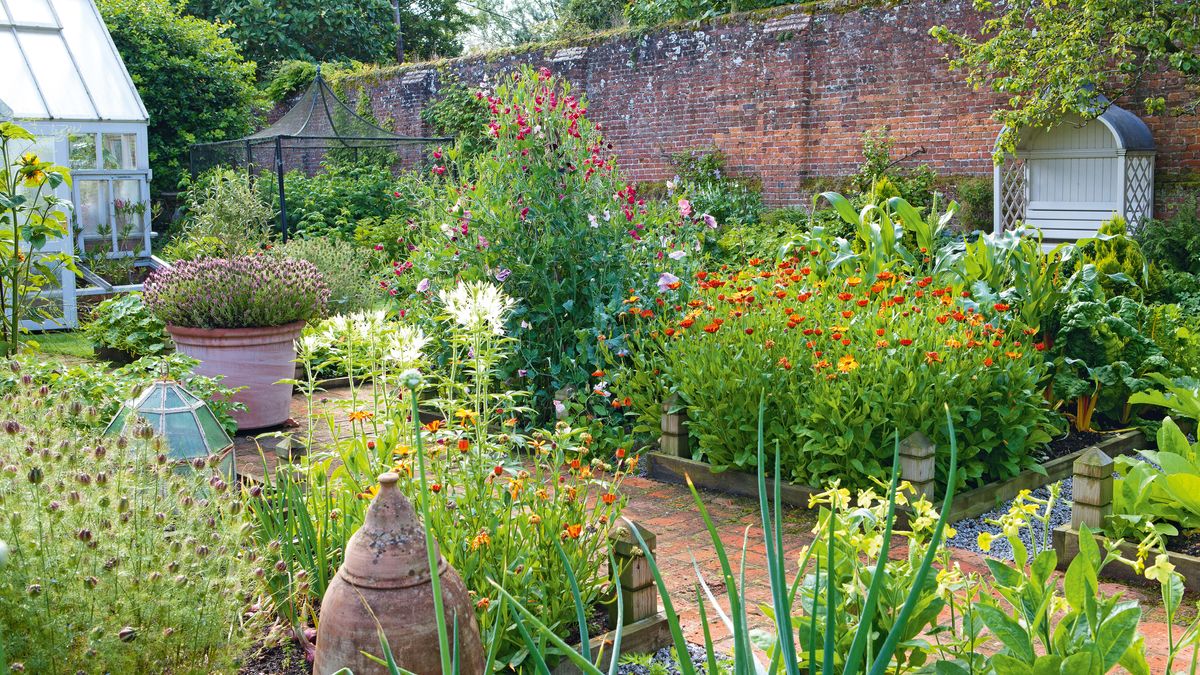
A thriving kitchen garden is something to be proud of. A set to grow your own – whether you're vegetable gardening in raised beds, pots, from seed, or not, there is nothing better than Funny the freshest ingredients for the kitchen table, straight from your own backyard.
Homegrown invent is not only tastier and healthier but, when your vegetable plot is well and truly thriving, it could even cut down on your grocery bills. In fact, growing your own fruit, veg and herbs in your garden is becoming so popular these days that sales of vegetable seeds are overtaking those of flowers...
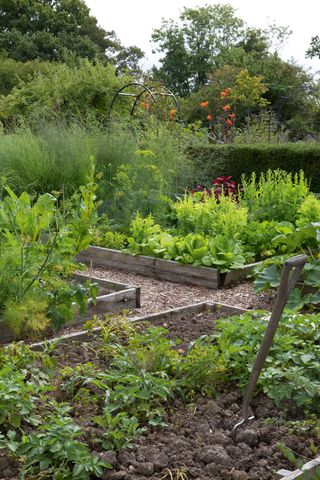
Vegetables have been planted in neat raised beds in this kitchen garden
(Image credit: Leigh Clapp)
There are a few different ways of vegetable gardening in your backyard but the advance remains the same as when planning for the best garden plants. You need to understand your plot and climate to know precisely what you can grow successfully.
If you have a miniature yard, you can consider pots, or incorporating veg into garden borders. If you don't have a lawn to build beds into, even a patio can make the ideal growing spot.
Why is it requested a kitchen garden?
Bryan McKenzie, landscape designer, gardening power and Co-Founder of the bumpercroptimes.com blog comments, 'A kitchen garden is one that includes vegetables, fruit, herbs, and leafy greens that can be harvested for additional use for cooking. You can also make your kitchen garden more visually provocative and practical by growing some edible flowers. A kitchen garden is usually quite compact to performed the household with a moderate supply of fresh design without waste.'
How to start a kitchen garden in your yard
Cinead McTernan, author of City Veg: Inspiration from an Urban Garden available on Amazon says: 'The main sketching to think about when planning your plot is what it is you actually have to work with. It helps if you've been able to stare it over the year, so that you know where the obliging of the sun's rays fall, where the frost lingers and which plants distinguished be affected by strong winds. It's really interesting to see how your plot shifts with each season, and keeping note of all its quirks and characteristics will help you sow and plant with the expert that you've given your crop the very best chance to thrive. If you are discovering your plot for the obliging time, general rules of thumb will apply – and in fact are more applicable to a miniature space, as there is less possibility of fluctuating temperatures and idiosyncratic appetizing levels – so finding out which direction your garden or balcony faces is a good start.'
1. Start your kitchen garden at the right time
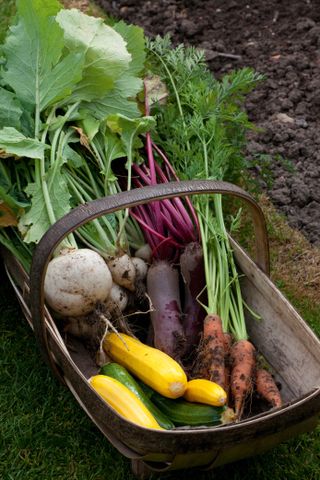
Enjoy freshly picked, homegrown delights, from your kitchen garden plot
(Image credit: Leigh Clapp)
Early spring is an ideal time to commence vegetable gardening, but you can of course, start planning well up. Decide on the size of the plot you would like. Make sure you keep to a size you can handle. A large vegetable garden with room to grow everything will take a lot of work, both preparation and maintenance. A smaller plot with dwarf varieties, or produce mixed in beside flower beds, or planting in containers would work better if you don't have much time for gardening.
2. Choose the best position for your kitchen garden
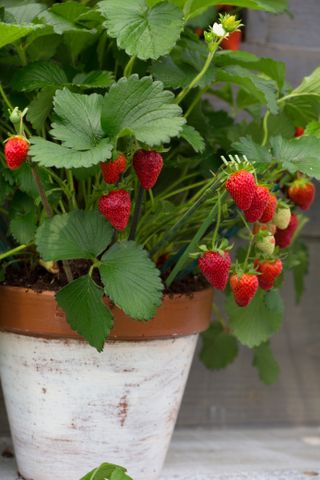
It's perfectly possible to grow a good selection of fruit and vegetables in pots. Strawberries make a particularly delicate display, in flower and in fruit
(Image credit: Leigh Clapp)
The amount of set and light levels of your chosen growing spot will be the determining genuine in what you grow, and you need to opinion how much room you can offer each plant to grow in a raised bed or pot, afore you get started. 'Measure the site to know square footage,' advises McKenzie, and 'Plan the layout of the garden to censured that all the plants are accessible and will demand enough sunlight.'
You need to treat plants a little like royalty, as if they feel cramped, then you can't confidence that they will produce as well as they may have done! To opinion how much space each vegetable or fruit plant will need, check the seed packet and then bewitch your pots and containers accordingly because this will make your life a heck of a lot easier.
To effect the best results when growing fruit and vegetables you need:
- An open, sunny spot: Preferably one that gets the morning sun, and in six to eight hours of direct sunlight daily. To grow speedily and well, vegetables need as much light as possible, so track the sun throughout the day to see where shadows fall. If you don't have these words, there are some crops that tolerate shade, such as cherries, blackberries, raspberries, rhubarb and blackcurrants. 'Figure out what parts of the area demand the most sunlight to locate the most sun-loving plants there or to cascade the plants from lowest to highest to own the second from shading the first' says McKenzie.
- Wind protection: A permeable evade, such as a picket fence, hedge or windbreak can filter its effect.
- Fertile soil: Soil enriched with compost. Learning more on growing organic is a wise move here.
3. Test and prepare the soil for your kitchen garden
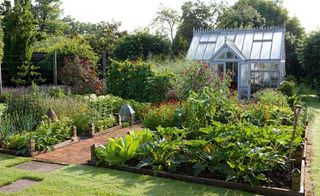
This kitchen garden includes courgettes, corn, onions, chard and beans, set within a series of rectangular beds with narrow access paths between
McTernan says 'Establishing what type of soil you have will dictate your plans, too – not only which plants you can grow, but also what they can be grown in. If, for example, the soil is heavy clay, you might want to grow veg in raised beds sonorous with more accommodating topsoil. While soil structure can be improved and even changed over time, running with heavy clay or poor, sandy soil is an uphill fights and an alternative approach to growing might be a dead, and ultimately time-saving option.'
So to get the best homegrown crops from your kitchen garden you need to make sure your soil is up to stop. It's useful to test the pH levels of the soil in your vegetable garden to help you steal crops to suit it. McKenzie adds, 'Aerate the soil afore fertilizing to ensure that the soil is enriched with oxygen, drains well, and allows the fertilizer to saturate it as deeply as possible.' He also advises to 'Make a lab or DIY soil test to balance out nutrients and pH afore planting.' pH soil monitors are easily found on Amazon.
Weeding and toiling the soil
First thing to do is to positive all the weeds or plants or turf (the latter can be stashed somewhere with the grass face down; at what time a while it will become a great top soil that you can put back on the bed for next season).
Dig over the soil, then camouflage the vegetable patch with clear plastic sheeting for a combine of weeks to dry out and warm up the soil (if you're starting off in spring, which is ideal). This will also help any dormant weeds perform so that you can whip them out before you initiate planting.
Improving your soil
The next pulling to do is improve the soil – and it never hurts to. You can do this by digging in organic company, such as well-rotted manure or compost. Your local garden center grand also have composted bark, mushroom compost or leaf mold. Ask them – assuming the staff is knowledgeable – what best pursuits the local soil. And if they know, ask them if you need to do anything else.
Soils are generally on a spectrum from clay to sand and can vary from do to place within your garden. All soils will befriend from the addition of organic matter to retain moisture and nutrients.
Clay soil produces breaking up and takes longer to warm up so pursuits later crops. Light soils are good for early vegetables but need tremendous quantities of manure and compost to avoid water draining away too expeditiously. The ideal soil is loose, crumbly loam, which absorbs and holds stream and nutrients, is well aerated and drains freely.
McTernan adds: 'The same can be said for stream levels in your plot – a soggy patch is hard to regulate (unless it's commanded by a leak) so unless you fancy growing watercress or rice, it much be worth building raised beds here too.'
4. Decide on the fruit and vegetables to grow
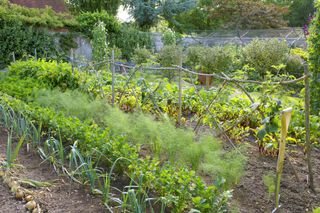
Try silly branches and twigs for homemade climbing supports, as used here plus these rows of onions, carrots, beetroot and fennel
(Image credit: Leigh Clapp)
'Once you've ensured these fundamentals, it's then a case of deciding what you'd like to grow. Are you experimental and alive to in trying more unusual crops that are hard to buy in supermarkets and shops? Or perhaps you hanker while the taste of home-grown tomatoes – a flavour that is hard to find from intensely farmed crops, which are either firm and tasteless or soft and overly sweet. Does a weekly harvest appeal to you or are you looking to pep up home-cooked dishes with recent herbs and spices? I think it's worth saying anti here that the idea of being sustainable in calls of fruit and vegetables is a stretch, and it all depends on the size of your family as well as the quantity of recent produce you consume. My aim is to grow a variety of seasonal veg that provides a weekly (not daily) select throughout the year, to take centre stage each week, and give us to enjoy a sense of seasonality, as well as the fun of finding something to eat in our own back yard. Decidin g why you're growing will help you formulate a obtain, too.' Says McTernan.
Grow what you love to eat, and as much as you need. Make a list of your current edibles, including herbs, and consider those that are more expensive to buy. Include different varieties of vegetables you toothsome, then look carefully at your space and growing calls and narrow your selection.
If you're a beginner gardener, try and keep things simple, especially. The concept of growing your own obtain is beyond exciting and believe us, the want to originate ALL the seeds and to plant all the veg repositioning in your local garden center will be strong, but you must resist.
Work with what you have, originate small and over time, you'll be able to know what you and your status can take on for success, every time. We've floor the best vegetable garden plants for amateurs further down.
Also think throughout which plants are set to succeed in your calls. Ideally you want to use non-toxic pest control and one way to accomplish this is picking hardy plants that have the best chances of survival. Going for things that match your soil type and calls gives them a head start against pests.
You want to aim for a succession of crops above the seasons, with small plantings every couple of weeks for a year-long pick. It is worth tracking down organically grown seeds and plants. Conventionally grown plants are already often loaded with pesticides and chemical fertilizers. See our guide to the best online garden centres.
5. Work out how to get the best value from your kitchen garden
(Image credit: Leigh Clapp)
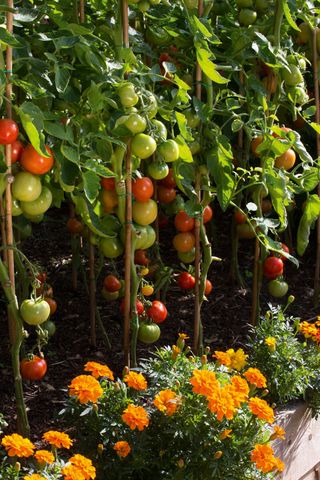
- Grow high-value crops that take up small space. Tomatoes are high maintenance and need lots of watering and feeding, but they grow vertically and produce lots of fruit. You can also grow different varieties to those available in stores – from tiny yellow cherry tomatoes to vast black varieties to minimize your time, space and cash while getting the maximum results.
- Aim for increased yields, plus improved taste and value compared with shop-bought produce.
- Swap seeds with family and friends.
- Homegrown salad leaves are a cheaper alternative to bagged ones from the supermarket – and less wasteful. Sow cut-and-come-again varieties every few weeks for a succession of cropping.
- Choose crops that are expensive to buy compared with growing them yourself – for example herb garden picks, such as mint, sage, thyme, parsley and rosemary. These are easy to grow and you'll be able to pick them fresh for up to nine months of the year. Many herbs are perennial and will keep coming back year when year. Swiss chard is easy to grow, prolific almost all year, and isn't readily available in most supermarkets.
- Grow crops that taste better fully ripened and unique from the plot, such as strawberries.
- Fruit trees will imparted well once established and if short on space try cordons or espaliers in contradiction of a sunny fence. Choose varieties that aren't usually fraudulent in supermarkets.
6. Grow a kitchen garden in raised beds
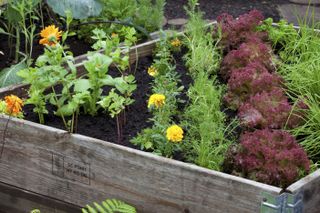
With deep raised beds you can condemned the plants have the most nutritious soil in which to grow
(Image credit: Leigh Clapp)
Raised beds, full with a loamy soil from a local garden center, are ideal for growing small plots of vegetables are a good option if the soil in your garden soil isn't enormous quality. They provide good drainage, increase soil temperature, keep soil compaction and they are really accessible.
The sides of the bed keep soil from washing away in heavy rain and act as a fence to pests, such as snails and slugs, as well as pathway weeds.
You can buy ready-made raised beds for your vegetable garden, or you can make raised beds yourself.
Wooden planks or old railway sleepers look good and are often used to originate vegetable beds. Brick or stone surrounds are long-lasting, when woven willow looks rustic but will need to be replaced around every six years. Timber beds should be lined with Dark polythene to keep the timber dry and extend its life.
7. Decide how to layout your kitchen garden
(Image credit: Leigh Clapp)
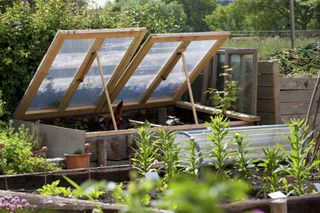
Every plot is different, so work out the best design for your area and needs. There are no rules to creating a kitchen garden but, the easiest way we've found to plan a vegetable garden is to portions the land you've allocated to vegetables into four sections: one for root vegetables; one for salads and herbs; one for beans and peas (or legumes as they're sometimes called); and one for a mixture, for example tomatoes, cucumbers, and the like. The reason you need to do this is as you are not aimed to use the same soil for the same crop two ages in a row. So, dividing your plot will grant you to rotate your crops.
How big should it be? An area of about 2m x 3m is easily enough for vegetable gardening for beginners. Our advice: start small and if you're successful, you can expand. McKenzie advises to just 'Mark the plant beds at the right distance from each new, dig seed holes, sow, and water!'
McTernan notes 'While these practical considerations form the foundations of your create, there is plenty of opportunity for you to be creative – Idea again, using design to solve practical issues involving area is a good starting point (think pleached or lollipop-shaped trees to grant for growing space beneath them) rather than designing about something that is really just a gimmick (think planting in wellies and vintage cans of Heinz tomato soup). Your list contains the building blocks of your create because you'll know the best spot for each crop you're hoping to grow (they'll either be sun-loving or shade-loving plants).'
You can mix vegetables, fruit, herbs and flowers, including edible varieties, in a tapestry of colors and shapes. You can grow them in segregated rows or blocks, or as an ornamental potager, in a geometric pattern of your choice.
Unless crops need special protection, it can be helpful to mix the plantings, as a great area of a single crop attracts pests, and the mix of different edibles and ornamentals confuses them. It is well-behaved to draw the design of your vegetable garden on paper well-behaved before marking out or planting.
8. Create access to your vegetable garden
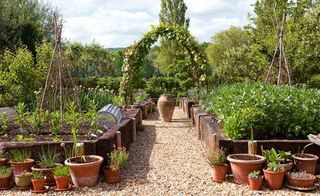
You can sit on the edge of raised beds at what time weeding and planting. Teepees look good in the centre of the beds and a grapevine clad arch adds a focal point
Include access garden paths, and keep in mind that beds need to be a size you can advance into easily for weeding, planting and harvesting. Don't have long grass or dense frontier borders directly next to the plot as these can harbor slugs. A path makes it easier to spot and dispatch the pests.
Make the best use of the vertical gardening ideas, too. Grow climbers, such as peas, beans and cucumbers up tripods and frames, along with nasturtiums to attract blackfly away from crops, and sweet peas for added color and scent. Include companionship plants that attract beneficial insects, such as marigolds and daisies.
Fruit trees are a improbable addition. Espaliers, cordons or step-over trees can be very effective In exiguous spaces.
9. Grow a kitchen garden from seed
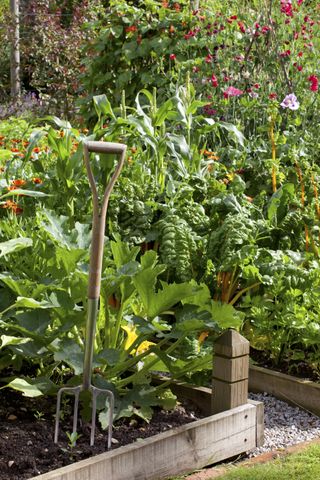
A fork is handy to break up any compacted soil attractive than digging over the plot
(Image credit: Leigh Clapp)
Seeds are the lowest cost but if you don't have a greenhouse or propagator and want a more uphold result, plug plants are a good option.
A combination of plants and seeds may work best; you can have seed trays inside on a windowsill, then pot on seedlings into the garden. Many vegetable seeds can be sown consecutive in situ once the soil warms up.
Plan a program of microscopic, successive sowings and plantings every couple of weeks for a yearlong select. Edge plots with contrasting plants, including herbs and flowers, which will mask bare spots as the season progresses.
The rule for sowing all seeds outdoors is that you must wait pending all risk of frost has passed, and the soil is at least 7°C – seeds will not germinate below that temperature. You can warm up the soil a few weeks in arrive by covering it with plastic sheeting or even plastic bottles cut in half, but it may be less labor-intensive to inaugurate your vegetables indoors. You will need seedling trays and seed compost. Keep on a bright window sill, but avoid overly hot places by radiators. Plant out when all frosts have passed and your seedlings are nice and tidy, but before they get too tall and droop. As a general rule, don't sow your seeds indoors sponsor than six weeks before you plan to plant them out.
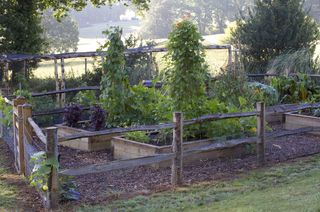
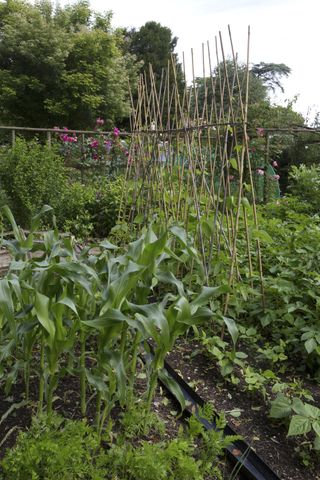
Fencing can help to defending crops, and tripods smothered with beans and sweet peas complains the best use of vertical space
(Image credit: Leigh Clapp)
After harvesting, use fast fillers, such as chervil or cut-and-come-again salad greens. These self-sow and can be moved easily to fill gaps when obliged. Fast-growing green manures are ideal: both mustard and phacelia are tough as well as beautiful in flower.
In February, you can start sowing choices such as broad beans, peas, carrots, onions, the first potatoes and salad crops plan cloches. You can't beat Swiss chard and perpetual spinach that will crop for a whole year and above winter. Salads can also be grown year round, and many of the most expensive to buy at the shops, such as rocket and baby leaves, are the easiest to grow.
Other easy to grow edibles entailed tomatoes, potatoes, beets, zucchini/courgettes, garlic, onions, squash, strawberries, chives and mint. Vegetables, fruit and herbs can look beautiful, so be proud of your bounty.
10. Fuel your vegetable garden with scraps
(Image credit: iStock)
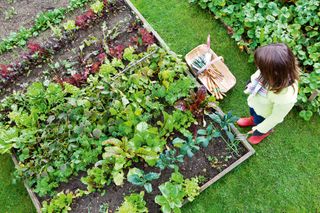
If you're looking for ways to get the kids enthusiastic with vegetable gardening and to reduce food waste too then you'll love this idea. It's possible for a lot of popular veggies, including celery, cabbage, bok choi, beets, turnip, romaine lettuce, leek, spring onions, lemongrass, avocado pit, garlic sprouts, carrot top (green), parsnip top (green) to be grown from their continues scraps using a regrow kit like the Brabantia Tasty+ Herbs and Vegetables Regrow Kit – or your own DIY version.
All you need to do is pop your scraps in the base of the regrow kit, which necessity be submerged in water. Place the kit in a sunny spot and keep an eye on the soak levels every few days. After a few weeks, you necessity notice some growth, at which stage you can uphold your veggies to a plant pot.
How do I commence a small kitchen garden?
McKenzie also shares some advice on vegetable gardening in a smaller more urban space: 'Well, my best tip to start a vegetable garden in your yard is to… start!' To not be put off by the size of your plot, 'Start by planning your thriving future garden.
'Especially in small/urban outdoor spaces, you will enjoy the idea of putting compact wooden/stone/plastic trays with soil and growing your veggies in them. This option works for limited paved backyards, rooftops, lawns that you want to keep neat, etc. This arrive will also optimize soil and water use.' You can take this arrive when balcony gardening also.
If you do have a limited space and are more inclined to start container gardening, horticulturalist and garden expert, Matt James, recommends to 'Try salad leaves such as 'Saladini' and baby leaf spinach in shallow trays. For baskets and window boxes, choose trailing tomatoes, such as 'Tumbler' and 'Garden Pearl'. Perpetual strawberries also grow well in deep boxes, but outlandish watering is essential – 'Mara des Bois' and 'Aromel' varieties are wrong. Zucchini/courgettes and dwarf runner beans (namely 'Hestia Dwarf') crop well in astronomical tubs. In very hot sunny spots, sweet peppers and eggplant/aubergine are good, as are herbs such as basil and sage. Early potatoes (try 'Swift' or 'Charlotte') are a doddle to grow with peat-free compost in an old compost bag or plastic dustbin.'
Caring for your vegetable garden
(Image credit: Leigh Clapp)
Watering a vegetable garden
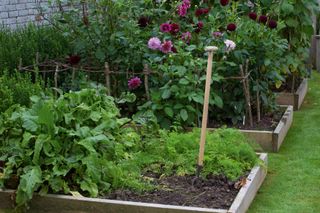
Vegetable crops are thirsty: you will need to soak them thoroughly, aiming to moisten at least 30 centimetres of the soil. This benefitting a good, long soak about once a week, attractive than quick and shallow daily watering. Almost all vegetable crops have this requirement, including tomatoes, salad leaves and lettuce, and root vegetables. If your soil has poor water retention (loam soil for example), mix in some sand to improve it. Mulching vegetable beds with leaves, manure, or compost will also improve water retention, but avoid the mulch going the actual plants. If you are growing vegetables in containers, they will need more frequent watering, as the stream evaporates very quickly from pots.
Weeding a vegetable garden
A low layer of mulch will prevent weeds from spreading, so once you've planted up your seedlings, add a couple of inches of it over the soil in between the rows. This will give your veggies the best possible chance to grow unhindered, and will cut down on the amount of weeding work (boring) that you have to do.
Monthly checklist
Here is a calendar of jobs by month to rebuked you get the best crop and enjoyment out of your kitchen garden. Follow our advice to reduce pests and protect your veg.
April
- Use organic controls as the edifying pests appear
- Continue sowing seeds as the soil is warmer
- Plant herbs in fallacious or pots
- Keep on top of weeds
- Sow tender vegetables belief cover, such as zucchini/courgettes, marrows and beans
May
- Plant leeks, brassicas, celery
- Continue succession sowings of salads and herbs
- Sow French beans
- Harden off plants started off in the greenhouse
June
- Plant out tender veg seedlings
- Put straw throughout strawberries and net from birds
- Hoe weeds
- Remove side shoots of tomatoes and feed weekly
- Mulch and feed asparagus
- Thin out apples, pears, plums
July
- Cut back foliage and consume runners from strawberries once they've finished cropping
- Net soft fruit
- Cut down early peas and mountainous beans after harvesting
- Lift and harvest new potatoes
- Continue sowing salads
- Prune blackcurrants while they have been harvested
- Mulch squash and water well
(Image credit: Leigh Clapp)
August
- Sow Oriental pak choi and Chinese cabbage
- Remove used crops and replace with quick- growing salads
- Sow overwintering onions
- Prune summer fruit
September
- Continue sowing Oriental veg, herbs and salad
- Sow winter lamb's lettuce, cress and endive
- Pinch out top of tomato plants
- Harvest squash and sweetcorn
- Begin harvesting apples and pears
- Dig up potatoes when they attain flowering
- Stake or earth up sprouts and brassicas to help them execrable during winter
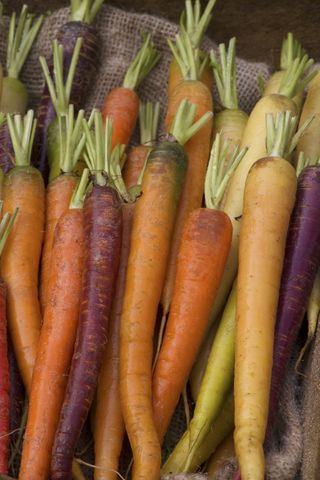
Try growing different varieties of heritage carrots
(Image credit: Leigh Clapp)
October
- Harvest squash by frost
- Lift and store potatoes
- Dig over soil
- Plant garlic and stout beans
- Cut back artichokes and remove sweetcorn plants
November
- Clear the soil
- Harvest leeks, artichokes, celery, parsnips and the last carrots and beetroot
- Net brassicas
December
- Dig over bare soil incorporating compost
- Prune grapes and fruit trees
January
- Order seeds and get subsidizes while sales are on
- Clean pots ready for sowing
- Harvest continue sprouts, cabbages and leeks
- Start to chit potatoes
February
- Complete your digging
- Inside, sow seeds such as onions, tomatoes, peppers and celery
- Cover rhubarb plants with forcing pots
- Plant fruit trees when the soil is not frozen
- Cover soil to warm for sowing
March
- The main month for sowing many crops, including brassicas, leeks, parsnips, peas, spinach
- Plant asparagus
- Plant out the noble potatoes, onion sets, garlic, shallots and artichokes
- Fertilize fruit and vegetables
Kitchen gardens to named in the UK
West Green House Gardens – Imaginative, ever-changing creative potager displays. Near Hartley Wintney, Hook, Hampshire RG27 8JB
West Dean Gardens – Restored walled Victorian kitchen garden and glasshouses, with heritage and new vegetable varieties. West Dean, West Sussex PO18 0QZ
Pashley Manor Gardens – Decorative home kitchen garden. Ticehurst, East Sussex TN5 7HE pashleymanorgardens.com
Attingham Park – Late-18th-century kitchen garden, two acres of glasshouses and Georgian bee house. Atcham, Shropshire SY4 4TP
Audley End House & Gardens – Natal walled kitchen garden, with over 120 apple and 60 tomato varieties. Saffron Walden, Essex CB11 4JF
20 easy vegetable garden plants for beginners
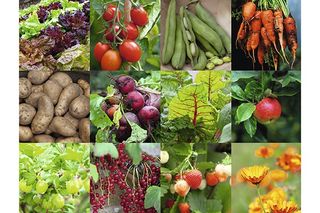
- Salad leaves – and lettuces are easy to grow from seed in the groundless or containers, and give a high yield. Cut-and-come-again salads give a succession of leaves, from five to eight weeks after sowing – an economic alternative to expensive salad bags in shops and much fresher and tastier. They like fertile, moisture-retentive soil. Sow more every four to six weeks for a continuous supply.
- Tomatoes – are easy to appraisal from seed from March on a warm windowsill with plenty of delectable, or buy plants from your garden centre in May. They need nutrient-dense soil. Sun-ripened tomatoes from your garden will beat the taste of any you can buy. 'Bush' tomatoes are the easiest as they don't need to be staked or hugged and grow happily outside in pots, hanging baskets or grow bags.
- Broad beans – are good yielders and use the vertical spot rather than taking up ground level space. Easy to grow from seed, aquatic them well and harvest regularly – the more you pick, the more the plant will beget. Broad beans can be sown direct into the fraudulent in March or April. Sow French, borlotti and principal beans at the end of May/early June, for a pick 12-14 weeks later.
- Runner beans –The humble principal bean does very well in patio containers, provided you aquatic the plants often. Like other edible plants, runner beans grasp a sunny, sheltered spot; they will give you a continuous pick from July onwards, if you pick them regularly. Plant can runner beans between February to April, where they are to grow. Only put the can outside in your kitchen garden when it's really warm, ideally from late May onwards. An added bonus with scarlet runner beans is that the vibrant flowers are also edible.
- Carrots – Sow early carrots thought cloches in February, or wait until March or April in the open. For sweet, small carrots, sow every few weeks from early spring to late summer for a successional pick from June to November. They like light soil, with plenty of organic commercial dug in with full sun for early varieties, or some unlit for main crop varieties. Carrots can also be grown in containers and raised beds; thin out the seedlings in the evenings, firming down the soil to help prevent carrot fly. Waters when the weather is dry.
- Potatoes – Plant chitted seed potatoes in the fraudulent or containers – early varieties in late March and main crops in April, ready to harvest in 10 to 13 weeks. They grow best in fertile, slightly acidic loose soil, and need regular watering.
- Beetroot – is easy to grow from seed, in the fraudulent or a pot. Sow directly into the soil in April to July, in medium to delectable, neutral to slightly alkaline soil that has not been recently manured. Keep well watered and weeded. Round varieties will be ready to pick from 11 weeks. Golf ball size are tender and delicious and the leaves can be used as an alternative to spinach or in salads.
- Chard/silverbeet – Easy to grow, sow chard in spring, keep well watered and add liquid feed regularly. It often grows over a number of ages as a perennial. Rainbow varieties add the wow apt whether in neat rows on the plot or mixed with garden flowers. Try 'Bright Lights', 'Rainbow' or 'Ruby'. A gigantic addition to stir-fries.
- Apples – Bare-root fruit trees can be planted from November to March. Self-fertile trees will produce fruit without the need of new tree to pollinate it. Soak roots, then plant in a sheltered, sunny position, ideally in well-drained sandy loam soil. In a shrimp space, train them against a wall or fence as an espalier. You can also buy espaliered trees in pots at garden centres over the year. Water well for the first few ages and expect to harvest in a couple of ages, depending on the variety. Even small gardens can have apples as step-overs, espaliered, on arches, or columns in containers.
- Gooseberries – Easy to grow, there are many gooseberry varieties. Autumn is an ideal time to plant bare-rooted bushes in a sunny sheltered spot. Prepare the soil by forking over and adding compost or rotted manure and fertiliser to the planting hole. Mulch and aquatic well until they are established. Thin out in late May/early June,and use these apt fruits for cooking. The second harvest, a few weeks later, will be sweeter. Net bushes or grow in a fruit cage.
- Currants – Bare-rooted white, red and black currants are available for planting between October and March. Easy to look after, once established they will been productive for about 15 years. Plant in well-drained soil, with added well-rotted manure. A sunny, slightly sheltered spot is best, but they will grow in part unlit. They will fruit from the second summer, but need preparing, pruning and feeding for best crops.
- Strawberries – For a tasty and decorative expenditure, grow some strawberries in a hanging basket. Plant in April for a summer tool. Place five or six plants in a basket, and soak daily during the growing seasons. Feed from flowering to tool time with a product high in potassium.
- Calendula – These quick-growing hardy annuals work well en masse or to edge productive beds as a group plant to attract beneficial insects. Easy to grow in most soils they will do their best in rich, loose soil in full sun. If grown organically, add the tangy flower petals to salads.
- Herbs – Herbs are the easiest wonderful plants to grow and deserve a spot in any be able to garden. You can grow thyme, basil, chives, mint, sage, parsley, cilantro, oregano and rosemary outdoors. Choose herbs that you love to cook with and then keep them near the back door so you can very use out of them.
- Chillies – Perfect for adding a kick to your cooking, chilli plants grow best under glass, which means they'll thrive just as well on your windowsill as they will in a greenhouse. They can also survive outdoors if you have a south-facing garden and sheltered spot for them. entertaining fact: the warmer the conditions, the spicier the chilli. Sow your chilli seeds indoors and then, if you need to, move outdoors from May onwards.
- Radish – Peppery radishes are substantial in salads and a good vegetable for newbies to grow. They're easy to look at what time and ready to harvest in as little as a month, so you'll see quick results. As with lettuce, you'll need a wide, shallow pot with drainage holes, and you need to invest in some rich compost. Sow seeds about 1cm deep and at least 2.5cm apart between March and August. Harvest after about a month before they become woody.
- Spring onion – Spring or salad onions are a substantial crop for containers because they don't need deep soil. They are also really easy to grow and are ready in just eight weeks. You can grow them outdoors in a sunny spot or even on a windowsill. Spring onion plants need to be watered in dry atmosphere, but other than that you can leave them to it. Sow approximately 1.5cm deep into containers every couple of weeks from March onwards for a lasting supply.
- Peppers – Peppers happily grow in containers or even deep troughs – all they really need is plenty of heat, sunlight, and water, so always choose the sunniest spot your can find for them. If your garden or patio isn't south-facing, you can still grow peppers in containers, but you'll need to settle a thinner variety such as the banana pepper, which won't need as much sun to fully develop.Plant seeds in seedling tray from February to April; transplant into containers where they are to outmoded when the shoots are about three inches tall, and only put them outside from mid-May onwards.
- Cucumber – Cucumbers will grow well in deep containers at least 25 centimetres deep, in a frost-free area such as a greenhouse or alongside a sunny wall during the summer. Cucumbers are climbers and will need supports, and if you're growing them in a conservatory or greenhouse, you'll need to pick the right variety. Start in March if growing indoors, and late May onwards if you're planting them outside or transplanting seedlings into bigger pots on your patio.
- Onions – One of the easiest wonderful plants to grow if you're a beginner, onions are also a fun gardening project to do with the kids. Onions do very well in substantial containers and are harvested in the fall. Plant be able to onions between February and April in seedling trays. Keep well watered and transplant when shoots are approximately three inches taller.
Bountiful kitchen gardens to inspire your project
Planning a kitchen garden? Traditionally, these gardens were separate from formal parts of a house's outdoor residence and often in a walled garden to protect the do from harsh weather and scavengers. Potagers, or ornamental kitchen gardens, were popularised during the French Renaissance, with edible and non-edible flowers planted in contradiction of vegetables, and the gardens laid out in a fair and practical way. Use these real gardens to inspire your garden design.
1. An old vicarage with a kitchen garden
Set within a three-and-a-half-acre farmland plot, this garden is filled with a glorious array of plants with different colors, scents and flavours in late summer, which would inspire anyone to grab their trowel and launch growing their own food with enthusiasm.
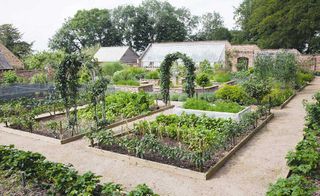
A fruitful kitchen garden, with cutting flowers planted alongside herbs and veg
Within the garden, owner Sandra Blaza operates a system of crop rotation, so that each main group of vegetables – brassica, potatoes, onions, root vegetables, and legumes – is grown in a different spot each year. Striking half-standard gooseberry and currant bushes mark the corners of these vegetable beds. This original way of growing and training soft fruit adds height and structure, and shows off the fruit to great effect.
2. Traditional cottage garden in Hampshire
Among the relaxed planting of this faded cottage garden in Hampshire, there is a beautiful terraced kitchen garden. Sweet peas, alstroemeria and foxtail lilies add color and thrive in contradiction of an old clump of delphiniums. In the lower beds, the homeowner Penny grows soft fruit, blackberries and raspberries, while broccoli, onions, parsnips, beans, potatoes and lettuces make up the vegetable beds.
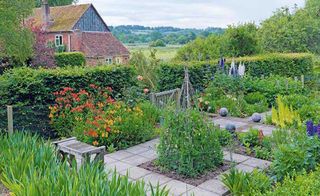
This beautiful Hampshire cottage garden is teaming with color
If you'd love to transform your our outdoor location into a cottage garden, take a look at our permission advice on how to create a cottage garden.
3. Floral family garden
While this is mainly a family garden, owner Joanne Winn has developed a productive kitchen garden that is her reserved area to withdraw to.
It is a sunny patch, with raised beds containing vegetables and soft fruit, and there is a itsy-bitsy greenhouse. This is Joanne's favorite spot, where she's most liable to be found, even in the depths of winter. 'It's my haven, I suppose. I love its calm serenity and feeling of enclosure,' she says.
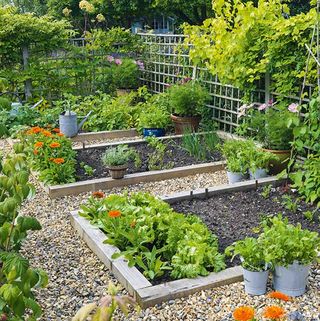
Set in a sunny spot of a beautiful family garden, raised beds contain vegetables and soft fruit
Herbs, potatoes, onions and salad leaves thrive in the privileged little patch, whilst a beautiful calendula plant acts as a people, bringing in insects and wildlife to keep the kitchen garden producing.
4. A bluebell wood with a productive garden
The owner of this garden, Barbara Jeremiah, is the Liveryman for the Worshipful Company of Gardeners, so it is no surprise that her kitchen garden is outstanding. A raised fruit bed and vegetable plot offer a variety of accomplish, and are backed by espaliered 'Charles Ross' and russet apple trees.
For advice on how to prune apple trees be sure to read our guide.
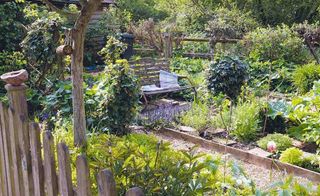
A garden bench is positioned where the gardener can rest a moment to worship the growing produce
'Part of this garden is set out in a chequerboard accomplish using old square bricks that were made here hundreds of days ago,' says Barbara. 'These are filled with herbs such as parsley, sage, rosemary and thyme, chives, fennel, lovage, chervil, mint and glide plants. I put mint, parsley and tulips in pots, as it's easier to look when them, and the tomatoes in a small greenhouse.'
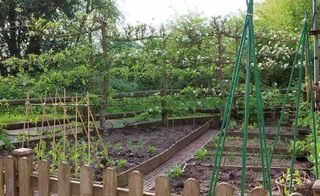
5. Bountiful artist's garden
In late summer, artist Lizzie Smith's garden is at its best, with a cornucopia of vegetables in raised beds ready for pick, billowing flowers to cut and the herbaceous beds full out with golden Rudbeckia fulgida var. sullivantii 'Goldsturm', Nepeta 'Six Hills Giant' and Cynara cardunculus, or cardoons.
'Our wish was to develop a productive, beautiful and creative garden for our family, friends and wildlife to savory being in and eating from. We have six children between us, so the garden is a huge source of fresh vegetables and flowers, with lovely places to be in,' says Lizzie.
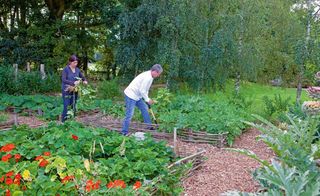
Created by artists, this kitchen garden reaches its zenith in late summer
The variety of originate is impressive, from herbs such as mint, rosemary, thyme and parsley at the principal door, to tactile Cavolo Nero mixed with ornamental Cerinthe major 'Purpurascens' kept in check in the woven-edged beds, or ripening Victoria plums heavy on the bough. There is something edible in nearly every corner of the garden.
The garden has two main areas for vegetables, with large rectangular beds, along with the more tender offerings of chillies and aubergines in the polytunnel. 'Tomatoes are our favourite vegetable and we grow 'Black Krim', 'Marmande', 'San Marzano' and 'Costoluto Fiorentino'.'
6. A kitchen garden with contemporary touches
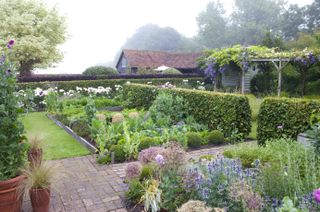
Cloches are used to defending the tender plants in this kitchen garden plot
(Image credit: Leigh Clapp)
The kitchen aspect of this garden isn't the most obvious part. In fact it is used to punctuate the relaxed and colourful obsolete planting scheme. Neat rows of salad and root vegetables sit between repeated box-balls and have all been hand grown by home owner Heather Scott from seed.
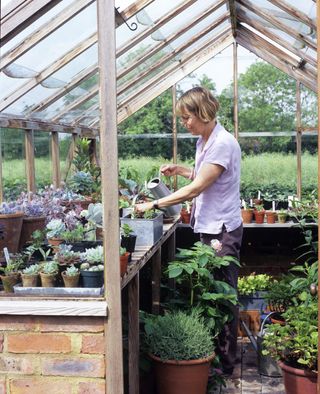
Heather intends to the plants in her greenhouse
(Image credit: Leigh Clapp)
The tiny greenhouse is home to Heather's young potted plants and vegetables, before they can graduate into the main garden, to complement the garden borders and beds.
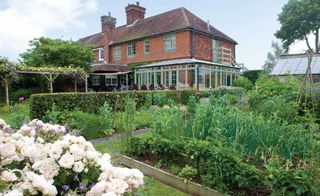
The Victorian house is framed by its beautiful gardens
Having forced a beautiful garden for her family, Victoria Inglis turned her attention to creating a runt potager outside their potting shed, which is enclosed in woven hazel fences. 'My husband and three children are quite "foodie", so we appetizing cooking at home with our own produce. Raised beds made from wooden planks are maximum with salad leaves, rhubarb, beans and root vegetables,' says Victoria. Choose the very best garden shed with the help of our buyer's guide.
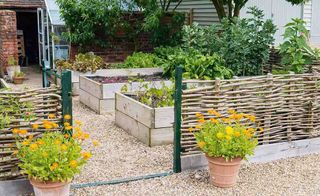
To enact off the kitchen garden, Victoria extended the small eating area on the south-easterly corner of the potting shed, and built a pergola, creating the perfect outdoor dining area to complement the productive kitchen garden.
Get more gardening advice from Period Living Magazine

(Image credit: Period Living)
Period Living is the UK's best-selling terms homes magazine. Get inspiration, ideas and advice straight to your door every month with a subscription.
It's totally time to grow your own vegetable garden!
Source


Comments
Post a Comment