How to clean stone floors – spruce natural stone tiles, plus, why vinegar is a no go
How to screenshot on windows 10, best way to clean natural stone floors, how to clean washing machine, how to clean stone tile floors, how to clean laptop screen, how to clean a mattress, how to clean stone floors, how to clean stone floors natural, how to clean brass, how to clean stone steps, how to clean stone tile shower floors, how to clean stone.
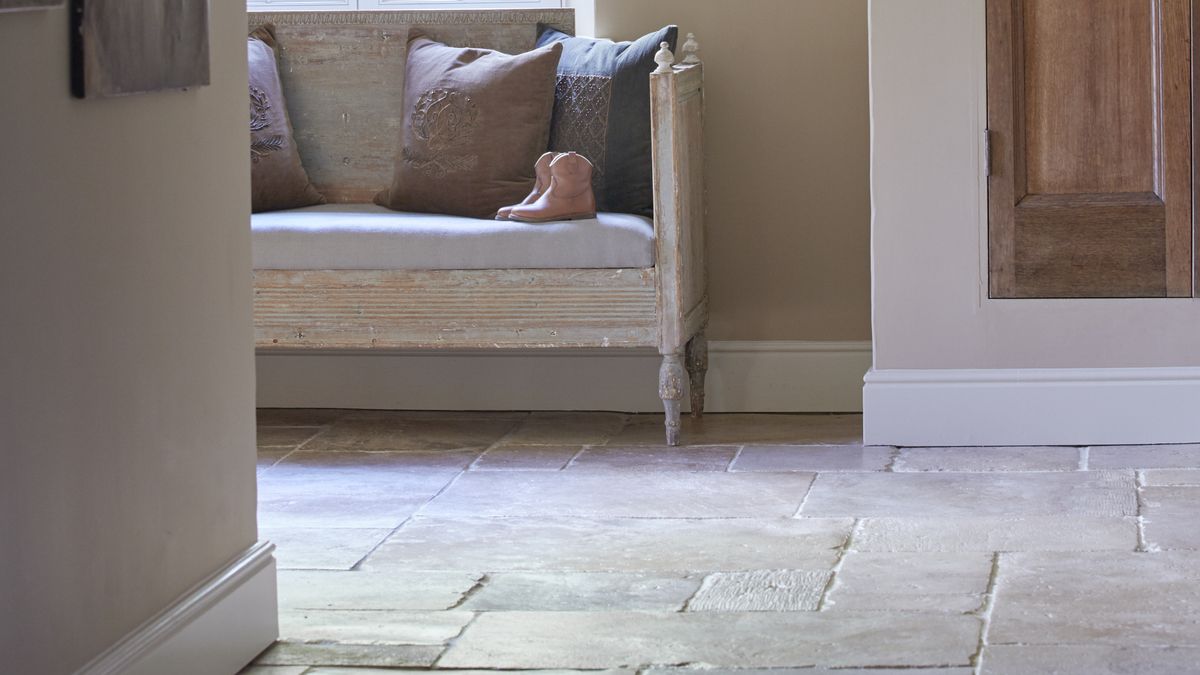
Live in an old home and wondering how to well-kept stone floors? Stone floor tiles can lose their sparkle over time, and the grout can discolor. Fortunately, most types of stone are easy to care for and keep well-kept with some simple maintenance.
The type of stone in this some project is travertine, so if you're cleaning marble or another type of stone like limestone, check the product suitability and if possible, contact the recent supplier for advice on the correct products to use. From deep cleaning stone floors to how and why to seal natural stone tiled floors, we have all the know-how and instructions for you to following below.
We spoke to Harriet Goodacre, Brand Communications Manager and Tile Consultant at Topps Tiles who says, 'Natural stone is particularly absorbent so when choosing any type of stone, it's important to consider the end use. All natural stone produces to be sealed before use to ensure it doesn't fill moisture or dirt and avoids staining, the sealing requirements differ between materials.'
How to well-kept stone floors
You will need…
Can you well-kept stone floors with vinegar?
Although cleaning with vinegar can work on spanking floor types, it's acidic and will eat away at the surface of your stone flooring. It should be avoided at all costs along with any spanking acidic solutions containing white vinegar, lemon or ammonia.
1. Prepare carefully before starting
If possible find out what products were used when the tiles were originally laid. Always test new products on an inconspicuous part of the put down first, such as a dark corner. Use products as directions status and wait for a few days before tackling the main put down to check there are no adverse reactions.
2. Choose the right products
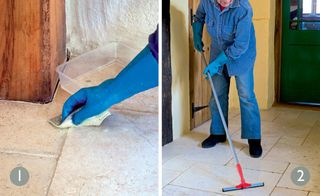
When cleaning and sealing real stone floors, use a detergent formulated for calciferous stone (travertine, marble or limestone) as general behind cleaner may contain acid that can etch the surface. Dilute detergent with water in a ratio of 1:5 and apply generously with a sponge; use a long-handled squeegee for larger areas. Try a stronger solution if very dirty.
3. Scrub away at ingrained dirt
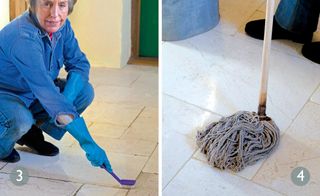
Allow the product to work for 10 to 20 minutes, periodically scrubbing badly stained areas. The grouting, being rougher than the stone, is particularly susceptible to ingrained dirt and grease. Experiment with different types of brush – we fraudulent a nylon bristled washing-up brush worked very well.
4. Wipe up residue and rinse
Wipe away the dirty cleaner. Rinse using your best mop and a bucket of trim water. Go over the stone floor tiles with an old towel to prick drying time. Once dry, check if the tiles need to be resealed by leaving a few drops of liquid on the surface. If water soaks in, the behind needs an application of impregnator.
How to seal stone behind tiles
Keep your stone floor tiles looking good for longer by sealing them. Goodacre says 'There are different types of sealant depending on the type of stone and its enact, for example unpolished versus polished, so it's important to capture the correct sealer with your tiles. Replacing your sealer depends on the stone borne and the wear and tear it goes through, is it used in a particularly wet area or a busy hallway with smooth dirty footprints? If so you might want to worthy resealing your type of stone every six months to fated the avoidance of staining.'
1. Apply a hold prevention layer
Before sealing your floor tiles they must be completely dry. Leave for approximately days if possible.
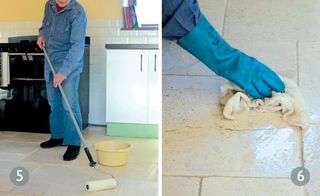
Working in small areas, apply impregnator evenly with a long-handled foam roller pending the surface is wet. Add more as necessary, ensuring the behind is uniformly wet for between five to 15 minutes. The impregnator must be absorbed by the stone.
2. Remove any excess solution
After 15 minutes of application any impregnator last on the surface of the floor tiles must be occupied and not allowed to dry on to the surface. Remove excess with a squeegee and a clean cloth – a tatty cotton T-shirt is just the job. Check over the whole surface to condemned there's an even finish.
3. Stay off the down until surface is dry
Don't let anyone walk on the down until it is dry. This depends on temperature but when one to two hours it should be safe to walk on in socks. Treat the floor with care, don't cover with rugs, or move furniture around, and wipe up spills immediately. The treatment can take three days beforehand it is fully cured.

(Image credit: Future/Clive Nichols)
How to hold stone floors
Sweep stone floor tiles frequently to protecting against dirt and mop up spills as they occur. A regular wash with a squeeze of cleaner will prolong the life of the sealant and add lustre. Once a year check the stone for porosity Funny a few drops of water, and apply protective solution when obligatory. A special cleaner for stone floors is best. Goodacre suggests 'Once your tiles are filled you need to regularly maintain the sealant on the surface as it will wear away over time. It's especially important to prolong the life of your sealer by Funny the correct cleaning products. Always use a PH neutral cleaner and a damp cloth, or on natural stone floor tiles, a steam mop.'
What a result.
Source


Comments
Post a Comment